


From the Program Director
Thank you for your interest in our program.
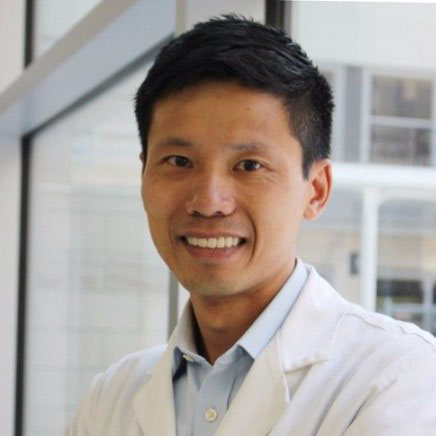
What I set out to build here is different from what I had seen elsewhere. In a large department, a resident can go an entire year without anyone being genuinely responsible for knowing whether they are getting better. With three residents in a class, that cannot happen. You will be known, you will be taught by people who have to answer for how you turn out, and you will not have to compete for anyone’s attention.
I am unusual among program directors in that I also chair the department. That matters more than it may sound. It removes a layer between our residents and hospital administration, and it means I can advocate for residents’ needs and interests directly — inside the department and outside it — without having to persuade someone else to carry the argument for me. When our residents need something, I am in a position to go and get it.
I also build our teaching material myself. Our lecture sequence, our tutorial cases, our journal club syllabus and our simulation scenarios were written for this department and these residents. When we find a gap in what a class knows, we do not wait for next year’s schedule — we write the session and run it.
The last thing I would ask you to weigh is the patients. South Brooklyn Health is a public hospital in a working neighborhood. Our patients are older, sicker, and more likely to be presenting for the first time with disease that has gone unaddressed for years. That is demanding work, and it is precisely why it teaches so well. Residents who train here learn to manage complexity early, because complexity is what walks through the door.
If that is the kind of training you are looking for, I hope you will apply.
Steven C. Yap, MD, MBA
Program Director and Chairperson, Department of Anesthesiology