


The curriculum at Jacobi Medical Center is designed to give radiology residents graduated responsibility as they progress through their training. Residents become well-rounded in all aspects of radiology as they learn from the various rotations, which include:
- Neuroradiology
- Emergency radiology
- Cardiac and thoracic imaging
- Body CT
- Body MRI
- Interventional radiology
- Ultrasound imaging
- Fluoroscopic imaging
- Pediatric radiology
- Mammography and Breast Imaging
- Musculoskeletal Imaging
- Nuclear medicine
Each weekday residents report to their assigned rotations at 8:00 AM where they’ll read studies until the daily 12:00 PM noon conference. After lecture residents return to their rotations until 4:00 PM, after which the day is complete for all those except the assigned short-call resident.
Call is broken up into short call, weekend call, holiday call, and night float. Short call is assigned to residents on weekdays and is covered from 4:00 PM until 9:00 PM. Weekend and holiday call is covered from 9:00 AM until 9:00 PM. Night float call consists of a single resident typically covering 6 nights in a row, from 9:00 PM until 8:00 AM (9:00 PM until 9:00 AM on weekends and holidays).
First Year
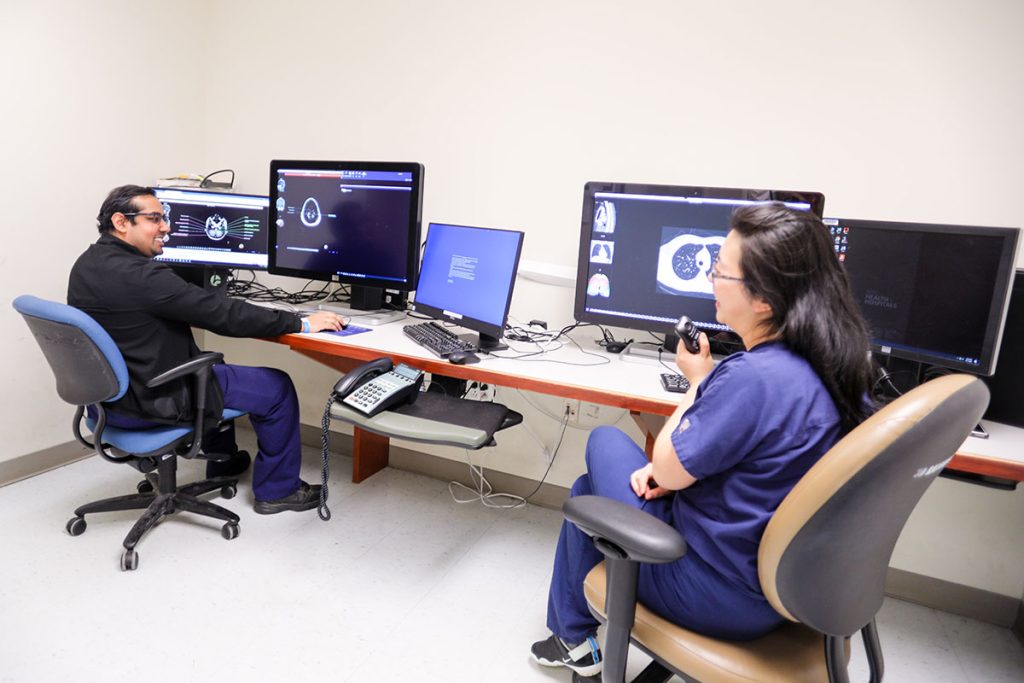
After satisfactorily completing an accredited internship, radiology residents begin on the first Monday in July as a PGY-2. The first two weeks of training are a structured orientation during which time new residents are given dedicated lectures by faculty and senior residents with a focus on basic radiology principles. Following the orientation, first-year residents will rotate through the core rotations together with a senior resident who will help guide them through the beginning of the rotation. After the first few months, first-year residents begin to take “buddy call”, during which they will enhance their learning while gaining confidence and developing their skills.
Second Year
In the second year of training, residents become acquainted with independent call and night float. While the first year of training is geared towards being ready for call, the second year allows residents to excel beyond the fundamentals of radiology. They are able to spend much more time in the subspecialties of Mammography, Body MRI, and others.
Third Year
The third year focuses on preparing residents for the American Board of Radiology’s Core exam, which includes subsidized attendance of the American Institute of Radiologic Pathology (AIRP) month-long pathology correlation course. Furthermore, accommodations are made to allow third year residents to interview for fellowship positions.
Fourth Year
During the fourth year, residents find out about their destinations for fellowship and enjoy mini-fellowships that are geared toward personal interests.
Early Specialization in Interventional Radiology (ESIR)
The Jacobi Medical Center Diagnostic Radiology Residency Program has an ACGME approved ESIR designation, which gives residents the opportunity to gain an added level of structured experience in interventional radiology, as well as the ability to match into an independent IR residency. Residents who have completed the ESIR track will be able to enter a one-year position in order to complete their training in interventional radiology and become dual-board certified in both diagnostic and interventional radiology. We will be able to accommodate up to two residents from each graduating class to pursue the ESIR track.