Morning Report
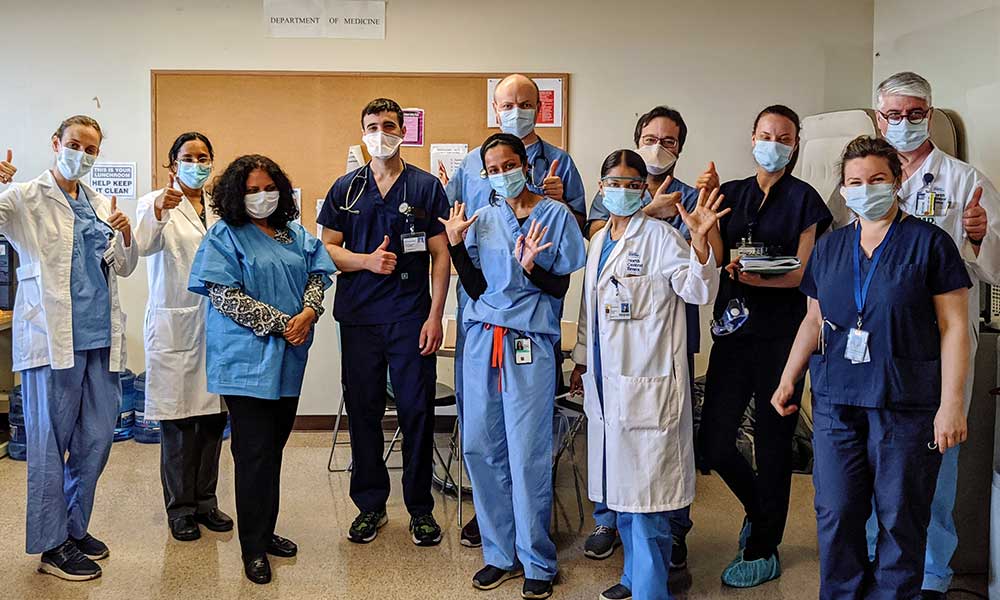
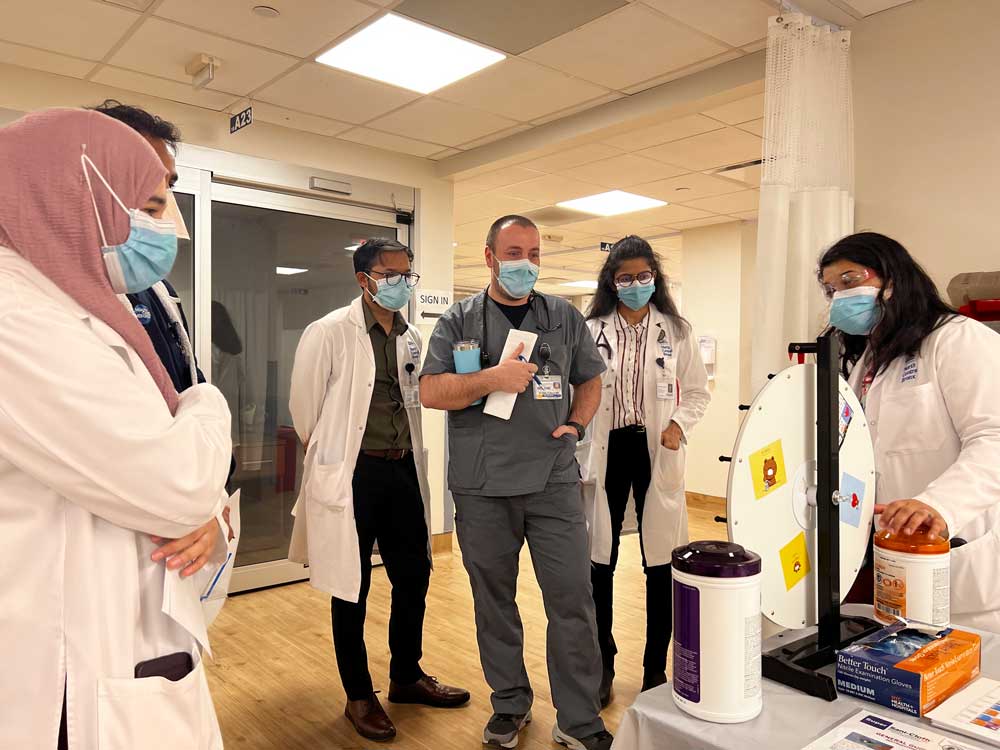
During Morning Report, night residents present admissions to attendings and the residents covering the service during the day. Morning Report is designed to facilitate critical medical thinking, with an emphasis on evidence-based medicine and minimizing bias. Residents present selected cases from their admissions to demonstrate assessment, planning, clinical reasoning, and data review skills. The attending physician helps in formulating the plan and provides education tailored to the clinical case. Other residents are encouraged to participate in the discussion and share their rationale and differential diagnoses.
Noon conference
The comprehensive daily schedule for inpatient medical education includes a noon conference starting at 12:30. This conference serves as a pivotal educational component, covering a wide range of topics across all medical specialties, ethical issues, disease pathology and pathophysiology, and major guidelines.
During the conference, attendees have the opportunity to engage with complex medical subjects, discuss emerging treatment modalities, and explore ethical dilemmas commonly encountered in healthcare practice. The inclusion of diverse topics ensures that participants receive a well-rounded education, fostering a deeper understanding of medicine beyond their specific specialty.
A distinguishing feature of the noon conference is the involvement of guest speakers from Jacobi Medical Center and Montefiore Medical Center, who bring a wealth of knowledge and experience to enrich the learning environment. Their contributions expand the breadth and depth of discussions, providing valuable insights into current practices, research findings, and clinical innovations.
Journal club and evidence-based medicine
Our weekly Journal Club focuses on the latest and most important clinical studies, presented and critiqued by both faculty and residents.
Evidence-based medicine lectures are an integral part of our curriculum. Facilitated by residents under the guidance of attending preceptors, these sessions emphasize applying the most current research to clinical decision-making.
During these sessions, residents present and critically appraise research studies, meta-analyses, and clinical trials relevant to patient care. Attendings provide guidance, mentorship, and expert insights, helping residents apply evidence-based principles to real-world clinical scenarios.
Through this collaborative approach, residents develop essential skills in evaluating medical literature, interpreting research findings, and incorporating evidence-based practices into their clinical decision-making.
Morbidity and mortality conferences
M&M conferences, led by third-year residents with attending physicians as preceptors, focus on complex cases and adverse outcomes. Residents present detailed reviews of patient history, interventions, and contributing factors, while attendings guide discussion and analysis.
These sessions promote reflective practice, strengthen clinical reasoning, and foster a culture of accountability, professionalism, and continuous quality improvement. By engaging in M&M, residents gain valuable insights into managing complex scenarios and improving patient care outcomes.
Chief of service conferences
Chief of Service conferences feature interesting and complex cases presented by PGY-1 residents, with attending physicians serving as preceptors. These sessions give junior residents the opportunity to showcase their clinical reasoning, presentation skills, and ability to synthesize patient histories, diagnostics, and management plans.
Under attending guidance, residents analyze the nuances of each case, highlight key decision points, and explore alternative approaches to patient care. The format encourages discussion among peers, fosters critical thinking, and reinforces evidence-based practice.