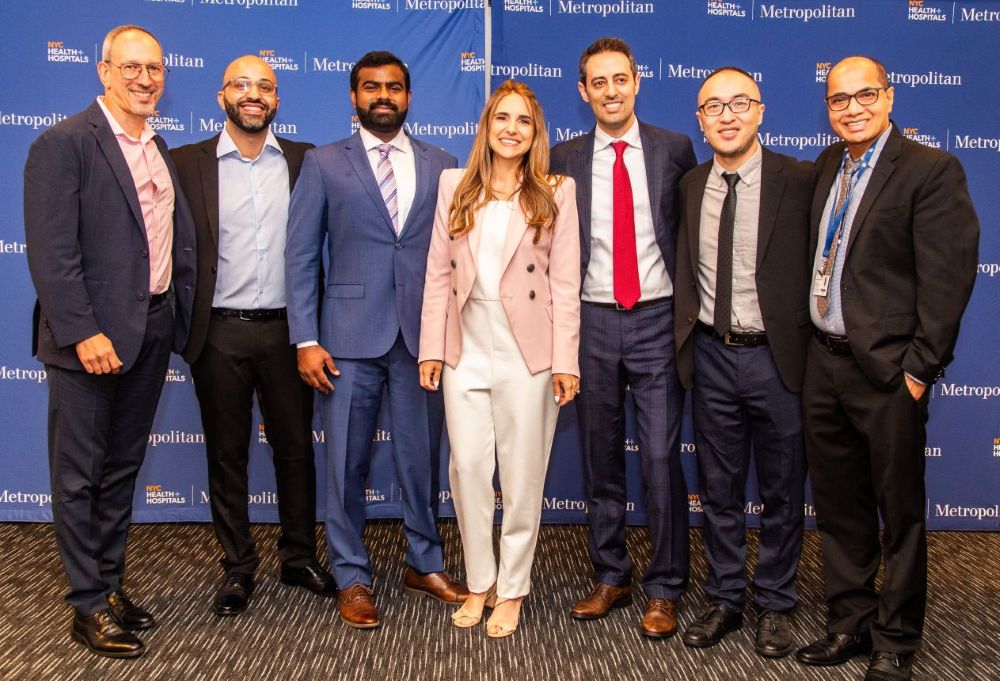
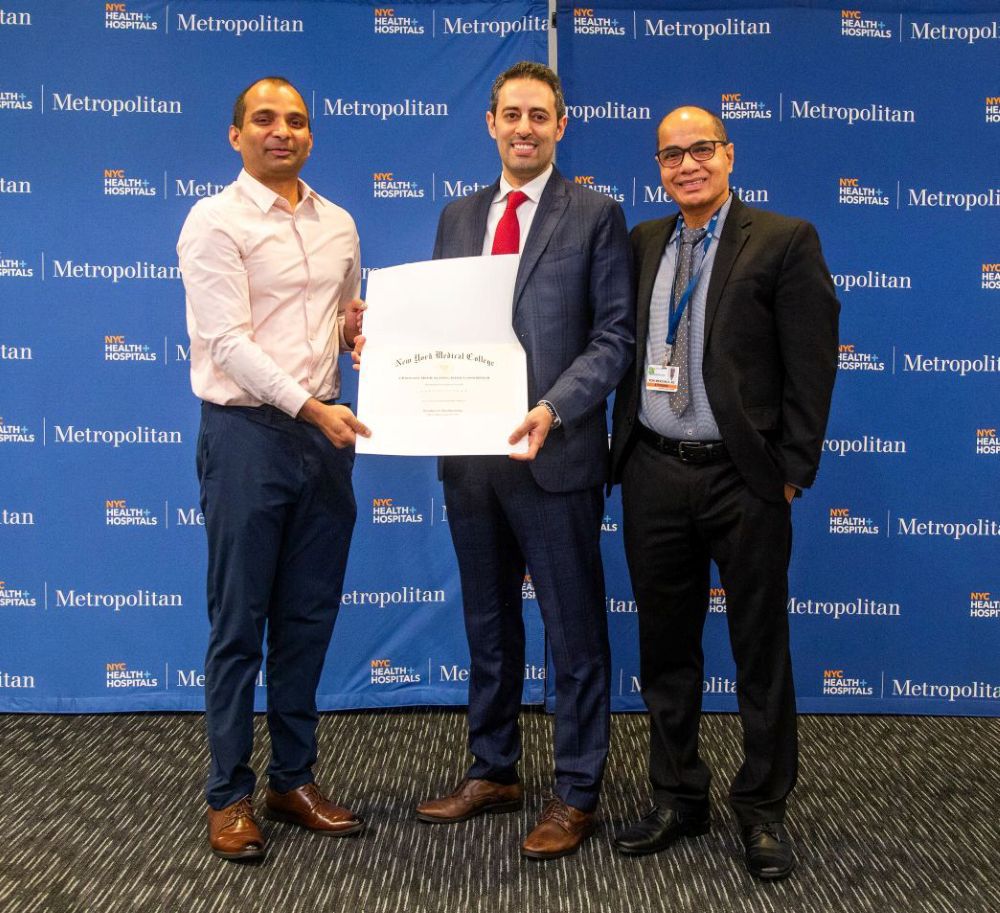
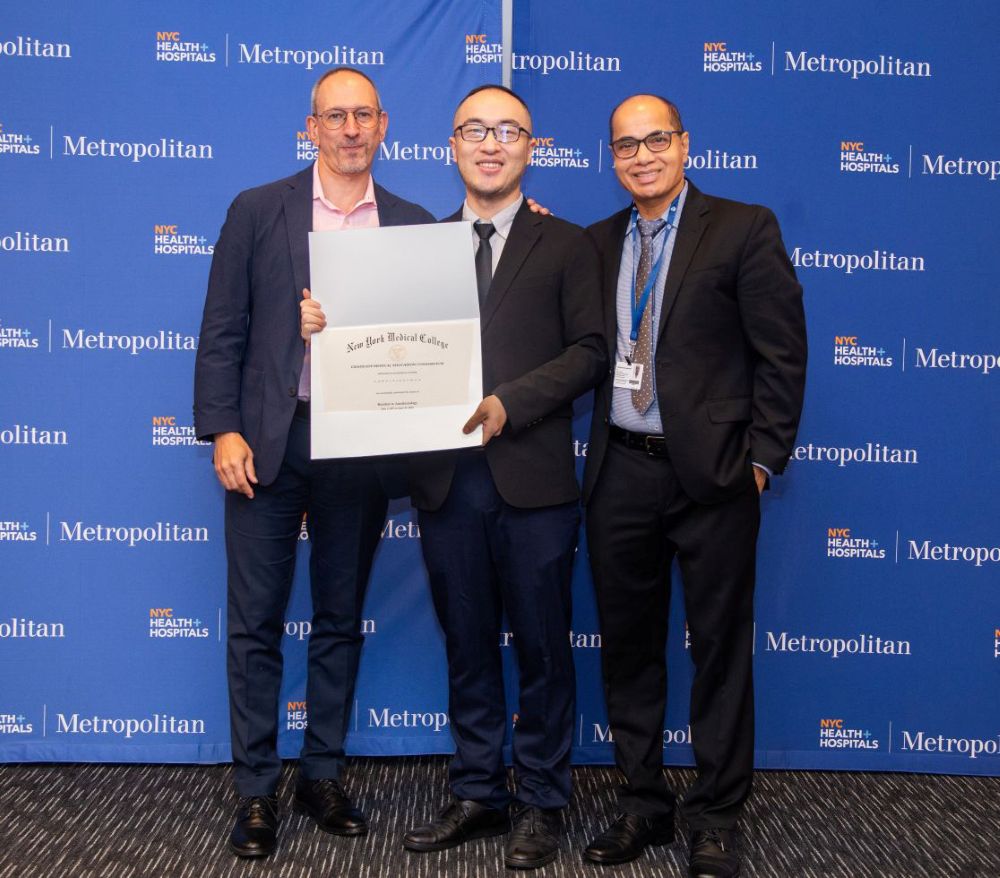
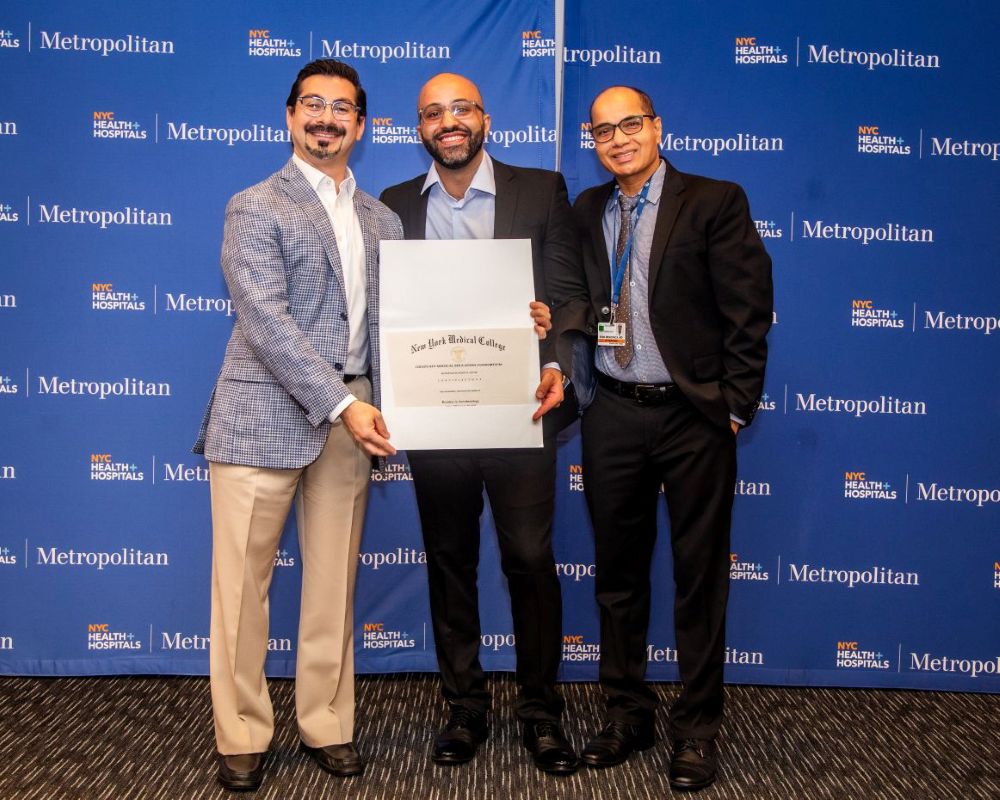
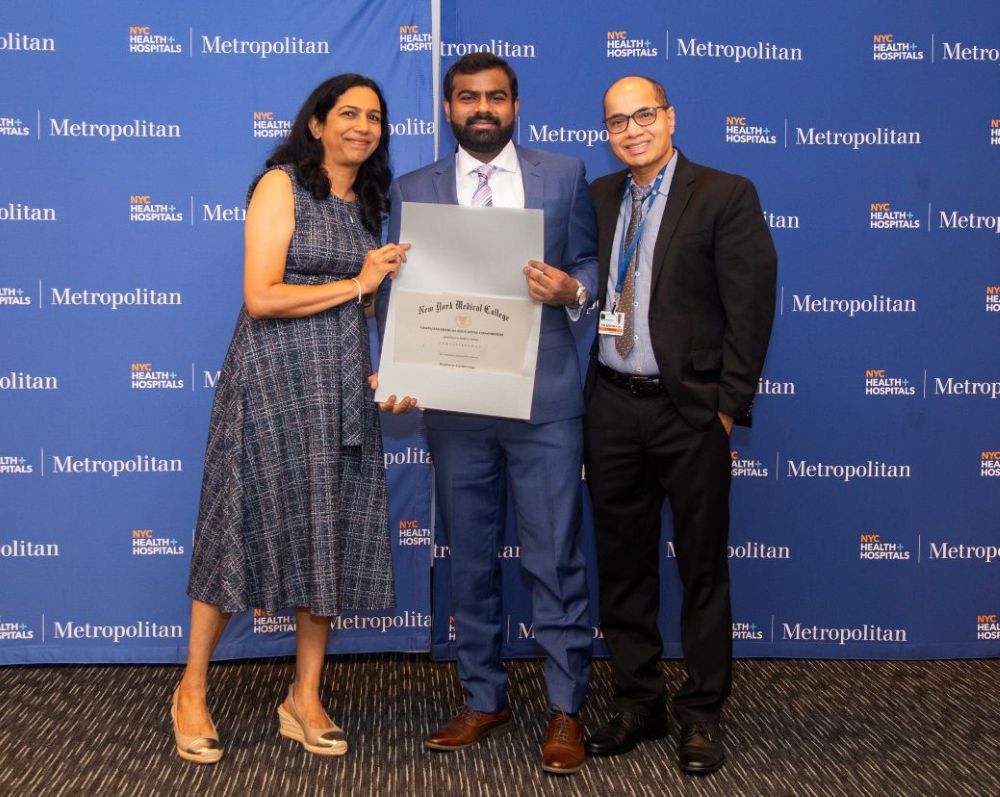
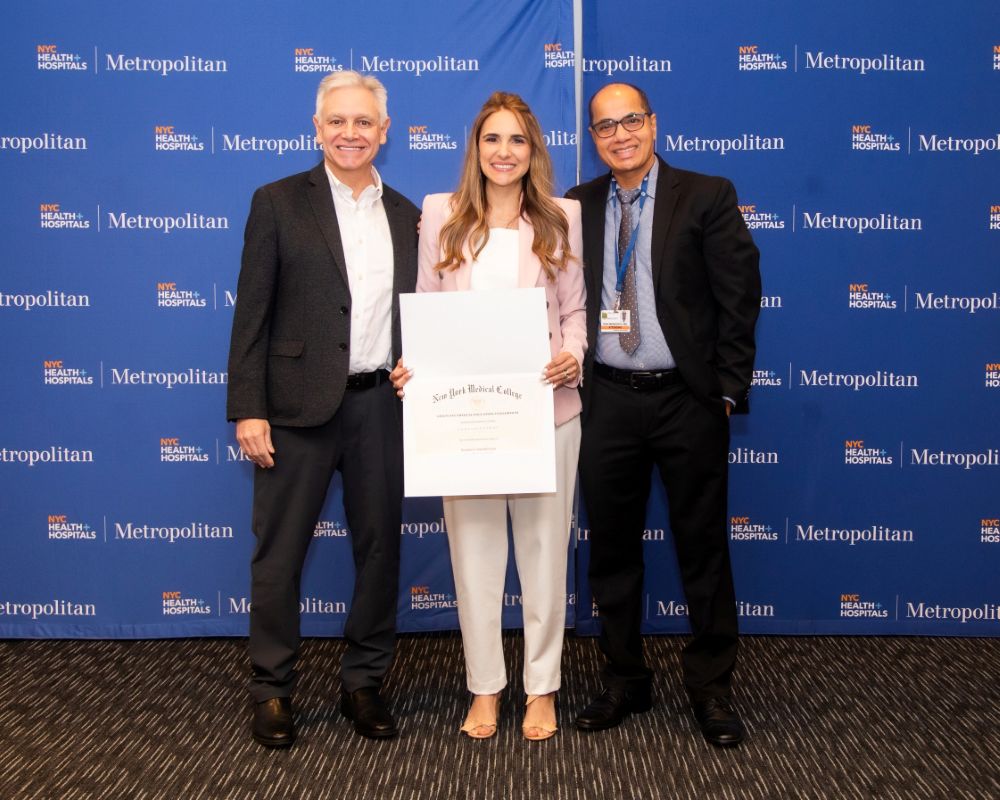
Our program is proud to have graduated residents who have gone on to become experts and leaders in the world of anesthesiology and its subspecialties. Some followed their pursuits across the country and around the world, while others continue to practice right here in New York City. We are honored to have been a part of their journey and grateful for the clinical expertise, academic rigor, and genuine compassion with which they supported New York City’s community hospitals every day of their residency.
Dr. Shoaib Nawaz
Dr. Shoaib Nawaz graduated from our program in 2026, but he won’t be far: our 2025-2026 chief resident has joined the Metropolitan team as an attending physician. He has been invaluable as a chief resident and involved in everything from program policies and initiatives to serving as a critical point of communication between the department and his fellow residents. We couldn’t be prouder to be a part of this moment in his career.
*
Serving as Chief Resident of the New York Medical College- Metropolitan Hospital Anesthesiology Residency Program this past year has been one of the most meaningful chapters of my professional journey. It was an opportunity to step beyond the operating room and into a role centered on leadership, advocacy, and service; both to our residents and to the department that has shaped so much of my career. Looking back, I see this year not simply as a period of responsibility, but as one of growth, reflection, and lasting connection.
Chief residency is often described as a bridge between trainees and leadership, but in practice it becomes far more than that. It requires balancing the operational needs of a busy, multi-site program with the individual aspirations, challenges, and wellbeing of residents. Our anesthesiology residency spans five training sites: Metropolitan Hospital, Lincoln Hospital, Jacobi Medical Center, Harlem Hospital Center, and Montefiore Medical Center; each with its own clinical environment, workflow, and educational strengths. Coordinating schedules, rotations, resident coverage, and communication across these institutions demanded flexibility, constant collaboration, and a deep appreciation for the complexity of graduate medical education in New York City.
This responsibility also highlighted one of the greatest strengths of our program: the diversity of training it provides. Across these five hospitals, residents gain exposure to a remarkable range of patient populations and clinical experiences. From high-acuity trauma and complex tertiary care to obstetric, pediatric, and community-centered anesthesia practice. This breadth creates physicians who are adaptable, clinically strong, and prepared for the realities of independent practice.
At the center of this training experience is NYC Health + Hospitals/Metropolitan, a historic institution in East Harlem that has served New Yorkers for generations. As one of the city’s longstanding municipal hospitals, Metropolitan carries a legacy of providing compassionate, equitable care to diverse and often underserved communities. That mission is reflected daily in the work we do and in the values our residency program upholds. It has been an honor to serve in a program so deeply connected to both medical excellence and public service.
What this year taught me most clearly is that leadership is rarely about authority; it is about listening carefully, communicating clearly, and creating an environment where others can succeed. Some of the most rewarding aspects of the role came through contributing to improvements in workflow, scheduling coordination, and resident support systems. Even small changes can have a meaningful impact when approached thoughtfully and collaboratively.
None of this would have been possible without the guidance and support of our program leadership. Dr. Roni Mendonca, our Program Director, has been an unwavering advocate for resident education and professional growth. His accessibility, mentorship, and dedication to the program have been invaluable throughout this year. Dr. Michael Girshin, our Department Chair, provided vision, encouragement, and a steady commitment to departmental excellence. His leadership has fostered an environment where academic development, clinical care, and innovation can thrive together. What stands out most, however, are the relationships built along the way. Working closely with faculty, leadership, coordinators, and fellow residents gave me a deeper appreciation for the teamwork required to sustain a successful department. The strength of our program has always been its people, and this year only reinforced that truth.
As I transition into my new role as an attending anesthesiologist within this same department, I do so with immense gratitude and excitement. It is a privilege to continue serving alongside the colleagues and mentors who have shaped my journey. Remaining here feels less like a departure from residency and more like the continuation of a shared mission of advancing patient care, education, and professional excellence.
This past year reaffirmed why I chose anesthesiology: it is a specialty grounded in precision, adaptability, and trust. It also reminded me that leadership in medicine is not confined to titles, but reflected in everyday actions that support patients, colleagues, and future trainees.
I leave my chief resident year with lessons I will carry forward for the rest of my career. I am proud of what we have accomplished together and optimistic about what lies ahead for our program. Most importantly, I am honored to remain part of this community, now in a new capacity, but with the same commitment to service, collaboration, and growth.
Shoaib Nawaz, MD
Class of 2026
Graduation