


NYC Health + Hospitals Study Finds Turning Off Nitrous Oxide Pipelines Addressed the Largest Source of Anesthetic Gas Emissions
Study published in Anesthesia & Analgesia found that emissions from anesthetic gases given to patients decreased by about half across the public health care system’s 11 hospitals
Nov 05, 2026
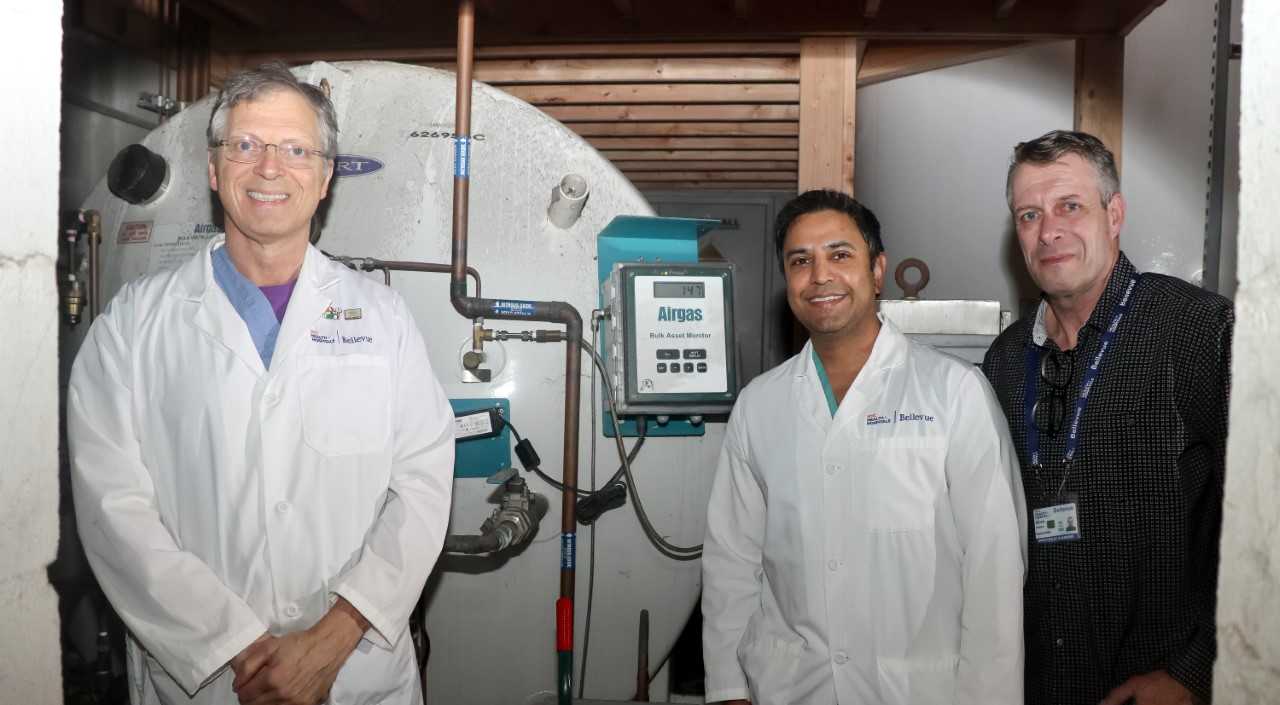
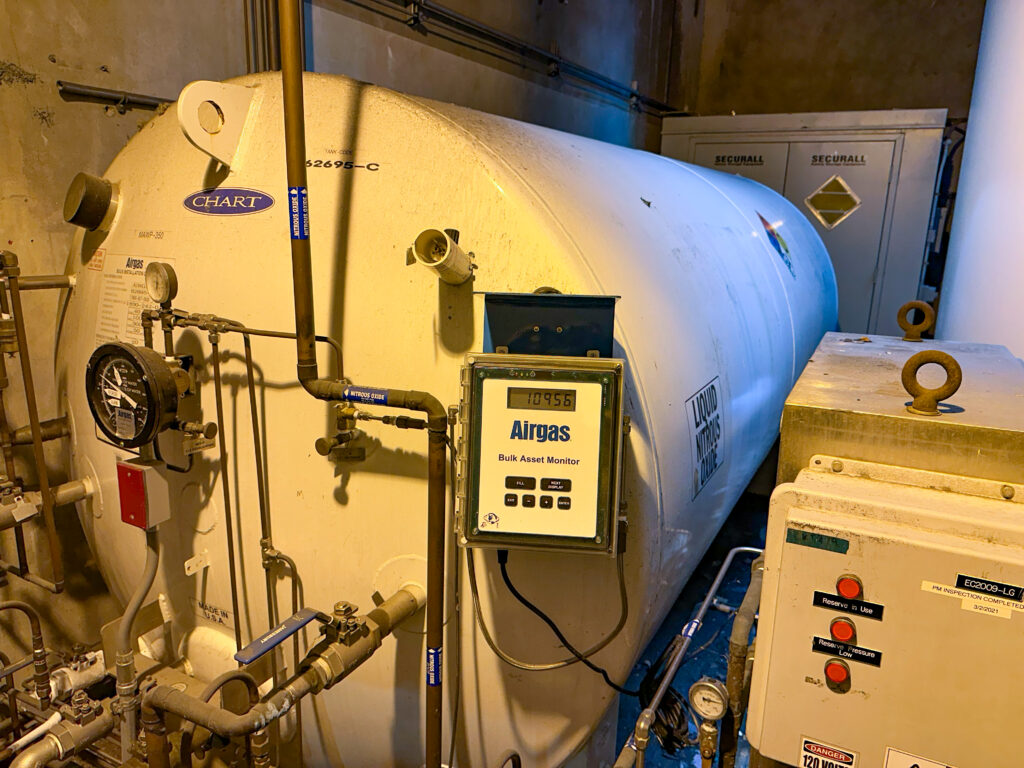
New York, NY – NYC Health + Hospitals today announced findings from an observational study of anesthetic gases at its 11 acute care hospitals, which found that turning off nitrous oxide pipelines stopped leakage and helped eliminate the largest source of anesthetic gas emissions in the public health care system. From April 2022 to March 2023, 94.6% of Bellevue’s central pipeline supply of nitrous oxide leaked before it ever reached a patient, according to the study published in Anesthesia & Analgesia, a peer-reviewed anesthesiology journal. The leaked gas had a carbon footprint of about 2,136 metric tons of carbon dioxide equivalent (CO₂e), or 2.6 times the yearly carbon emissions from all anesthetic gases given to patients across all 11 hospitals. Nitrous oxide, also known as laughing gas, is a potent greenhouse gas that stays in the atmosphere for more than 100 years. Many hospitals store nitrous oxide in large tanks and pipe it through the building to operating rooms, but these pipeline systems are prone to leakage. Between June and December 2024, Bellevue Hospital, Elmhurst Hospital, Jacobi Hospital, and North Central Bronx Hospital turned off their central nitrous oxide pipelines, which stopped leakage. The public hospital system reported early results of this work in April 2025.
“Providing the highest quality care also means thinking about the long-term health of the communities we serve,” said NYC Health + Hospitals/Bellevue Chief Executive Officer Eric Wei, MD, MBA. “This study shows that we can make meaningful progress in reducing the environmental impact of health care while continuing to focus on safe, effective patient care. As a public health care system, we have an opportunity to lead by example and share what we learn with hospitals across the country.”
The study covered 148,762 surgical cases under general anesthesia over 45 months, from April 2022 to December 2025. Researchers measured carbon emissions from anesthetic gases given to patients and evaluated two changes: turning off centrally piped nitrous oxide, and an electronic reminder that prompts clinicians to lower the flow of gas through the anesthesia machine when it is higher than needed.
Across the 11 hospitals, the daily climate impact of anesthetic gases actually given to patients also decreased by 51% from the start of the study to its final months. At hospitals that turned off nitrous oxide pipelines, the share of cases using this gas fell from 26.9% to 0.9%. At other hospitals, the share fell from 27.4% to 21.4%. In the study’s statistical analysis, turning off the pipelines was associated with a large decrease in emissions from nitrous oxide given to patients.
Bellevue Hospital spent $56,200 on bulk nitrous oxide for its pipeline from April 2022 to March 2023, and 5.4% of the gas reached patients. The gas lost that year had about the same climate impact as the yearly emissions of 460 passenger cars.
“Most of the nitrous oxide Bellevue Hospital bought for its pipeline never reached a patient,” said the study’s lead author, Kenneth M. Sutin, MD, Associate Chief of Service in Anesthesiology at NYC Health + Hospitals/Bellevue and Principal Investigator of NYC Health + Hospitals’ Fresh Gas Flow Project. “The losses at one hospital produced more emissions than all the anesthetic gases given to patients across our 11 hospitals. Turning off the pipeline ended those losses. By identifying opportunities to reduce unnecessary use and prevent losses, hospitals can take practical steps toward more sustainable care.”
“Addressing the climate impact of anesthesia requires collaboration among anesthesiologists, hospital leadership, and the teams responsible for delivering care,” said study co-author, Sudheer Jain, MD, Chief of Service for the Department of Anesthesiology at NYC Health + Hospitals/Bellevue. “By measuring our practices across an entire health system, we were able to evaluate multiple approaches and identify changes that can inform future efforts to reduce anesthetic greenhouse gas emissions.”
“Our clinical, facilities management and engineering teams worked together to safely decommission centralized nitrous oxide systems without disrupting patient care,” said Manuel Saez, Ph.D. Senior Vice President of Office of Facilities Management and Development at NYC Health + Hospitals. “This effort highlights the important role our Facilities Management teams play in reducing emissions, improving efficiency, and advancing our sustainability goals.”
“Some of the greatest opportunities to improve hospital operations come from challenging longstanding practices and taking a closer look at how we use our resources,” said NYC Health + Hospitals/Bellevue Chief Operating Officer Erfan Karim, MPH. “By bringing together clinical expertise, engineering, and operational leadership, we identified a significant source of inefficiency and implemented a practical solution to eliminate waste and reduce unnecessary costs. This is a powerful example of how data-informed decision-making and cross-disciplinary collaboration can drive meaningful, lasting improvements in hospital operations.”
Desflurane, an anesthetic gas with a high climate impact, had been removed from four of the hospitals before the study and remained available at six. Desflurane use decreased over the study period, although no intervention targeted the choice of desflurane. The share of cases using desflurane decreased from 2.3% to 1.1%, and its daily climate impact decreased by 74%.
The study’s findings support the 2024 recommendation of the American Society of Anesthesiologists to turn off central nitrous oxide pipelines and leave them out of new construction. By combining improvements in clinical practice with operational changes, hospitals can work toward reducing greenhouse gas emissions and limiting avoidable waste.
###
MEDIA CONTACT: 212-562-4516; BellevuePublicRelations@nychhc.org
#253-26
About NYC Health + Hospitals/Bellevue
NYC Health + Hospitals/Bellevue is America’s oldest public hospital, established in 1736. Affiliated with the NYU Grossman School of Medicine, the 851-bed hospital is a major referral center for highly complex cases, with 6,000 employees including highly skilled, interdisciplinary clinical staff. The hospital is a Level I Trauma Center and annually it sees about 110,000 emergency room visits, and more than 520,000 outpatient visits. Clinical centers of excellence include: Emergency Medicine and Trauma Care; Cardiovascular Services; Bariatric Surgery; Designated Regional Perinatal Center and Neonatal Intensive Care Unit; Children’s Comprehensive Psychiatric Emergency Program; and Cancer Services. For more information, visit www.nychealthandhospitals.org/bellevue and follow us on Facebook, LinkedIn, and X (Twitter).
About NYC Health + Hospitals
NYC Health + Hospitals is the largest municipal health care system in the nation serving more than a million New Yorkers annually in more than 70 patient care locations across the city’s five boroughs. A robust network of outpatient, neighborhood-based primary and specialty care centers anchors care coordination with the system’s trauma centers, nursing homes, post-acute care centers, home care agency, and MetroPlusHealth—all supported by 11 essential hospitals. Its diverse workforce of more than 46,000 employees is uniquely focused on empowering New Yorkers, without exception, to live the healthiest life possible. For more information, visit www.nychealthandhospitals.org and stay connected on Facebook, Twitter, Instagram and LinkedIn.